
Vibrant Dermatology

Book SkinBar MD Book Dermatology
(617) 250-0257
MENU
  • HOME
  • SHOP
  • ABOUT US
    • Meet Dr. Ip
    • Meet Our Staff
    • Why Vibrant Dermatology
    • Dr. Ip In the News
    • Featured Videos
    • Blog
    • Get Dr. Ip’s E-Book
    • Gap Year Program
    • Contact Us
  • Patient Resources
    • Appointment Policies
    • Insurance Information
  • Before and Afters
  • (617) 250-0257
  • (617) 540-5524
  • online bill pay
  • Book an Appointment
  • Medical Dermatology
    • Acne
    • Allergic Reactions
    • Autoimmune Disorders
    • Benign Growths: Seborrheic Keratoses, Skin Tags
    • Birthmarks, Brown Spots, Moles
    • Cysts
    • Eczema/Rashes
    • Excessive Sweating (Hyperhidrosis)
    • Hair Loss
    • Hives
    • Hyperpigmentation/Brown Spots
    • Keloids
    • Lipomas
    • Melanoma
    • Melasma
    • Nail Fungus
    • Psoriasis
    • Scars
    • Shingles
    • Skin Cancer
    • Skin of Color
    • Vitiligo
  • Surgical Dermatology
    • Cyst Removal
    • Lipoma Removal
    • Mole and Benign Lesion Removal
    • Skin Cancer Surgery
  • Pediatric Dermatology
    • Acne
    • Birthmarks
    • Eczema
    • Moles and Brown Spots
    • Skin Allergies
    • Skin Cancer
  • Cosmetic Dermatology
    • Aqua Facial
    • Neurotoxin (Jeuveau)
    • Chemical Peels
    • Era Elite Laser
    • Hair Loss Treatment
    • IPL Treatment
    • Juvederm
    • Kerafactor
    • LaseMD
    • Laser Treatment for Facial Veins
    • Melasma & Hyperpigmentation Treatments
    • NeoClear Laser Acne Treatment
    • NeoSkin Skin Rejuvenation Treatment
    • Non Surgical Face Lift “Liquid Lift”
    • PRP Treatment
    • PRX Skin Revitalization
    • Radiesse
    • Restylane
    • RF Microneedling
    • Sculptra
    • Sofwave Skin Tightening
    • Stretch Marks Treatment
    • Scalp Revive
  • Wellness
    • Sexual Wellness
    • O-Shot
  • Home
  • Shop
  • About Us
    • Meet Dr. Ip
    • Meet Our Staff
    • Why Vibrant Dermatology
    • Dr. Ip In the News
    • Featured Videos
    • Blog
    • Get Dr. Ip’s E-Book
    • Gap Year Program
    • Contact Us
  • Services
    • Medical Dermatology Services
    • Surgical Dermatology
    • Pediatric Dermatology
    • Cosmetic Dermatology
    • Health and Wellness
      • Sexual Wellness in Dedham, MA
      • Weight Loss in Dedham, MA
  • Before and After Gallery
  • Book Appointment
  • All Products
  • Online Bill Pay

Skin Care Changes, Winter To Spring

The weather in Boston is warming up, which means Spring will be here before we know it!  When the air is very dry and cold it is important to layer up with serums and moisturizer to help combat dry skin.  As the air warms up, humidity will increase which will help keep your skin from drying out.  It’s time to say good bye to dry, itchy skin!!  There are a few simple things you can do to help transition into warmer months.  Each of these will help to keep your skin healthy and glowing. 

Beauty Routines

Exfoliate:  Cold, dry air has surely left extra dead skin cells behind and an exfoliation will help to slough away those cells.  I suggest a chemical peel for your face (if you are in the Boston area, schedule an appointment with me!) and a DIY Sugar Scrub for the rest of your body.  Pay extra attention to elbows and knees and always exfoliate before hair removal. If you want something you can use at home, I like the HydroPeptide Anti-Wrinkle Polish & Plump Peel (order with code ‘Doctor-Ip’ for preferred pricing) or Peter Thomas Roth Max Complexion Correction Pads. 

Moisturizer:  Swap your heavy moisturizer for something a little lighter.  Skin will hold more water in the spring and summer so you won’t need as much moisturizer.  Your heavy winter moisturizer could leave you feeling and looking a little greasy.  In general, I recommend that creams be used in the winter and lotions be used in the summer.  CeraVe AM and CeraVe PM  are my go to moisturizers. 

Sunscreen:  Incorporate sunscreen into your routine. An easy way to get your sunscreen is use a moisturizer with sunscreen in it. In the winter, we can get away with using a moisturizer that includes an SPF 30.  Once we move into warmer months I suggest using a sunscreen separate from your lotion and makeup that is at least SPF 50.  When enjoying the sun for a prolonged period of time (e.g. beach, hikes,  pool), sunscreen needs to be applied every two hours. After two hours the sunscreen is no longer effective. Sometimes, people do not reapply make up because they are concerned about ruining their make up. In this instance, I recommend that you try a brand like Colorscience. The brand makes several  SPF 50 mineral powders that will allow you to freshen up your make and get your sunscreen.  Check out my Product Recommendation page for my favorite sunscreen options. 

A Good Spring Clean

When you open the windows and start your Spring cleaning at home, don’t overlook your personal products.  Toss anything that is past its expiration date or over six months old and be sure to give your make-up brushes a deep clean.  Products with SPF will lose their effectiveness overtime so this is a good time to replace these products.

Take The Challenge

Spring is a great time to freshen up your skin care routine.  Download my FREE E-BOOK, The Clear Skin Challenge for 30 days worth of skin tips, product recommendations and advice that will set you on a path to clear skin.  

What changes do you make during the transition from winter to spring? 

Dermatologist Boston

Hyde Park Dermatology

Black Dermatologist

Canton Dermatologists

African American Dermatologist



Cure Your Acne Once And For All – Part 2 Choosing The Right Face Wash For Acne Prone Skin

face wash for combination acne prone skin

If you missed my first post in this series, be sure to head over to the main Cure Your Acne page to read “Making The Diagnosis” so that you can effectively treat your acne with the information below. Face wash for combination acne prone skin is one of the options available in the market for a more glowing skin. 

To achieve clear skin, we are going to go back to basics and start with washing your face. Irrespective of what type of acne you have, washing your face is an important thing to do. Facial cleansing is important because it enables you to remove dirt, oil, and other unwanted debris from the skin. During the course of a day, our facial skin can get covered with pollutants, bacteria, viruses, dirt and old skin cells. In the first blog in this series, I mentioned how all acne starts from a clogged pilosebaceous unit (aka pore). People with acne prone skin may experience poor skin turnover, which results in dead skin cells getting trapped in the follicles causing white heads and black heads. Improper skin washing can make acne worse, because excessive dirt on the surface of the skin can also block follicles. Furthermore, excessive dirt on the skin’s surface can prevent acne medications and anti-aging products from penetrating the skin and thereby prevent them from curing your acne. Cleansing also helps promote proper skin hydration, and helps maintain proper pore size. So how do you know what cleanser is best for you? It depends on three main factors – what type of acne your have, whether you have dry, oily, or combination skin, and most importantly, what other acne medications or anti-aging products you are using on your skin.

Before we dive into the details, I would like to make a quick recommendation on how to read this post. My goal is to try to help people cure their acne, so this has to be pretty comprehensive!! If you have a short attention span like me, I recommend going straight to the subtitle that pertains to what kind of acne you have. If you don’t know what kind of acne you have, please read the first blog in this series. At the end of this post, I give some general instructions that apply to everyone, so be sure you read that too.

How to choose the right facial cleanser

In my first blog in this series (making the right diagnosis), I introduced you to the four main types of acne. For a brief review they are as follows: 1) comedonal acne (non-inflammatory); 2) inflammatory acne (pustular and cystic); 3) combination acne (both comedonal and inflammatory); and 4) hormonal acne. If you are not currently using any acne treatments, then your face wash can actually be the first step in your treatment plan. Let’s discuss what ingredients may be helpful for you based on what type of acne you have.

  • Comedonal acne – at the core of comedonal acne is a problem with poor skin turnover resulting a number of white heads and black heads. If you have this kind of acne, you want to get an acne wash with salicylic acid. Most over the counter salicylic acne washes contain 2% sal acid. With the introduction of Differin (a topical retinoid available over the counter), I would recommend sticking to a gentle face wash combined with Differin to treat comedonal acne. 
  • Inflammatory acne – If you have you have inflamed bumps or pustules on your skin, you’ll want to find a face wash that contains benzoyl peroxide (BPO). When it comes to BPO washes they come in many different strengths. BPO washes can range from 2%-10%. If you have inflammatory acne, you may be tempted to think that a stronger wash is better. This is not always the case. BPO washes can be very irritating to the skin, causing dryness and burning. As a result, I do not tend to recommend 10% BPO washes, unless it is being used for the back. In most instances, I think a 5% wash is fine. However, if you have inflammatory acne and sensitive skin, I would start with a 2% wash. BPO is the ingredient used in Proactiv. If you have inflammatory acne, then this may be just what you need. However, if you don’t have inflammatory acne… well, then that’s why Proactiv is not working for you!  Take caution when using 3-step acne systems that are sold as a kit as these products will often include active ingredients in each step of the kit.  When BPO is applied in excessive amounts the skin will become dry and irritated. 
  • Combination skin – In general, I recommend that most people wash their face twice a day. If you find that you have combination acne, and you are NOT on any other acne treatments… meaning the only other thing you apply to your skin is moisturizer, then you could try to use a sal acid cleanser in the morning and a low strength BPO wash at night – 2% tops. It will be very important to avoid over irritating the skin, so you will want to apply a moisturizer to your skin after each wash.
  • Hormonal acne – When it comes to hormonal acne, I have to say out right that a wash alone will not improve this problem. Hormonal acne requires a hormonal solution, which will be discussed in another blog. Most women with hormonal acne are in their mid-late 30s or forties, which is a time where they may also be concerned about anti-aging. My recommendation for women with this type of acne is to pick a product that will help with acne, but that is also anti-aging. Look for ingredients such as glycolic acid and azelaic acid, which can help with acne, but also help with brown spots, hyperpigmentation, and fine lines. Again, it’s important to remember that less is more. Using too high concentrations of these ingredients will cause skin irritation and that may lead to more acne. I recommend concentrations between 2-5%. Hydropeptide makes a great cleanser in it’s anti-aging clarify collection that would be good for a woman with hormonal acne. It contains ingredients that will gently exfoliate and control oil, balance the skin’s pH, and sooth inflammation. Hydropeptide is on the pricier end of skin care products but I would say, well worth it. Use code ‘Doctor-Ip’ at checkout for 15% off all Hydropeptide products.
  • Face wash for the individual who is already on acne medication – Let’s say that you are already on acne medication. Maybe it was given to you by your PCP or by a dermatologist. Often times, I see patients who have been seen by other dermatologists. They have received acne medications, but they feel that are not seeing results. It’s not enough to have medications… skin care matters as well. As I mentioned, if you are not using the right facial cleanser, medications may not be able to penetrate properly. For those on acne treatment, I always recommend a gentle facial cleanser. In this instance, the washes that I have mentioned above may be much too strong if acne medications are already being applied to the face.  If you are looking for a gentle face cleanser, my top choices are HydroPeptide Cleansing gel (use code ‘Doctor-Ip’ to save 15%) or Vanicream Gentle Cleanser.  

The last factor to consider when choosing a cleanser is what skin-type you have. If your skin is excessively dry, you will want to avoid foam-based cleansers, and those with a high alcohol content. You’ll also want to avoid astringents (which I tend to avoid in all my patients). If you have dry skin and acne, you need to be careful. Whenever your skin senses that it is too dry, it will respond by increasing your sebum production. Increased sebum production means increased acne. After you wash you face, you will need to moisturize twice a day. It’s non-optional for you. You’ll want to look for a creamy cleanser. For oily skin, foams may work well for you. You’ll also want to make sure that your cleanser is pH balanced. Cleansing gels can be used as well. In most instances, because I am treating patients with acne medications, I recommend a simple gentle cleanser. However, this is particularly important if you consider yourself to be someone with sensitive skin.

So now that I have taken you through how to pick the right facial cleanser, let’s close by reviewing how to wash you face. Yep, there is a right and wrong way to wash your face!! Proper face washing is almost as important as a proper face cleanser.

When washing your face, it is important to remember a few things:

  • Use lukewarm water. If the water is too hot or too cold you might end up with broken capillaries on your face, which will leave your face red.
  • Make sure your hands are clean. A clean face starts with clean hands.
  • Wash twice a day, no more. If you over wash and strip your skin of natural oils your body will start producing more oil and pores will be more likely to become clogged. If you have excessively dry skin, you may need to wash only once a day. I would recommend washing at night and then splashing lukewarm water on your face in the morning.
  • Avoid abrasive face towels, and keep clarisonic brushes to a minimum. Over exfoliating, will cause skin irritation, which will cause your skin to break out. I would limit the use of these brushes to three times a week max.
  • Don’t rush. After a long day I know how tempting it can be to rush through your evening routine. Your face requires gentle action and you should take time to work in the product and to rinse well. When you have finished with a thorough cleanse and rinse, pat dry with a soft towel.

Do you have a favorite cleanser?  I’d love to hear about it in the comments below.  Also, be sure to enter your email address below if you would like to be notified when I publish the next post in the series. 

Dermatologist Boston

Hyde Park Dermatology

Black Dermatologist

Canton Dermatologists

African American Dermatologist



Sneaky Things That Clog Your Pores

If you’ve read my some of my acne posts, then you know that from a dermatologist’s perspective all acne starts off with a clogged pore. But what do we really mean when we say clogged pores. Literally, clogged pores result when dead skin cells are retained in the pores of your skin rather than being shed into the environment. This creates whiteheads and blackheads. When this happens bacteria on your skin can get very excited, because they love to feed off of the dead skin cells that are clogging your pores. The end result can be inflamed bumps and pustules. For most acne sufferers, there are many things that control this process (to find out more read the Cure Your Acne Once and For All post). However, even if you have perfectly clear skin most of the time, they are certain things you could be doing that may explain your occasionally clogged pores and breakouts.  

  1. Smog – This is location dependent but if you live in a city, you likely suffer the effects of smog on your skin.  Unless you’re up for relocating, there isn’t much you can do to prevent this.  To combat these environmental toxins, make sure to cleanse with a gentle cleanser twice a day. You can also try applying a weekly mask that contains activated charcoal which can help to draw oil, dirt and other substances from pores.  
  2. Cell Phone – If you are constantly on the phone, you may notice your face is more prone to breakouts in certain areas.  If you think about it, cell phones can be pretty gross.  They come in contact with multiple surfaces during the day and often end up in the bottom of a purse (along with everything else that is in there).  Use hands-free when possible and clean your phone every day.
  3. Your Hands – Stop touching your face!  Yes, you can get rid of the bacteria on your hands with regular hand washing.  However, hands have naturally occurring oils which will clog pores.  The less you touch your face, the better!  And please please don’t pick your acne… this usually just results in more scarring.
  4. Pillowcase – Wash it once weekly, at least.  Your skin may be clean when you go to bed every night, but your face is not the only thing coming into contact with your pillowcase.  Some swear by a silk pillowcase to help retain moisture and help reduce the appearance of wrinkles.  
  5. Makeup Brushes – Bacteria can accumulate here, quick!  I always suggest a deep clean of makeup brushes every month.  Bonus, a clean brush seems to help with makeup application too!  
  6. Athletic gear:  Working out regularly is so good for you! If you are into sports where you’re wearing a helmet or other equipment all the time, beware.  The constant friction from equipment can make it difficult for your skin to shed dead skin cells properly, resulting in clogged pores. These pieces of equipment can also be a bacteria breeding ground. This can contribute to inflammatory acne. They can also result in staph infections of the skin a condition called impetigo. Make sure the gym equipment in washed regularly, and always wash your face with a gentle cleanser after a tough work out.
  7. Makeup – This one may seem pretty obvious but it is amazing how many women don’t wash their face before going to bed!  A solid evening skincare routine is important.  Removing makeup will ensure clear pores and will allow your skin to repair itself.  

If your pores are clogged, stick to a gentle cleanser twice daily.  Avoid vigorous scrubbing as it can stimulate more sebum production.  Exfoliation once per week will help slough off dead surface cells and a product with salicylic acid will help to clear pores (and keep them clear).  

Join me in the Beauty Club and Referral Program and on Facebook, Twitter and Instagram for lots of fun skin tips, giveaways and more!

Dermatologist Boston

Hyde Park Dermatology

Black Dermatologist

Canton Dermatologists

African American Dermatologist



Eczema in Babies and Young Children

Eczema is a chronic itchy skin condition that can range from very mild to severe. Several things cause eczema, but one of the most common causes of eczema is atopic dermatitis. Atopic dermatitis is a hereditary form of eczema. When my daughter was about 5 months old, she started to develop itchy rashes on her cheeks and on the back of her legs. Because I was a dermatologist in training, I knew that she had eczema. Babies who have eczema usually have a family history of hay fever, allergies, or asthma as they are all genetically related. While my husband and I did not have eczema, we did have a family history of asthma and hay fever.  It can be very difficult to prevent atopic dermatitis, but a good skin care routine can help to minimize the severity of this skin condition.  Eczema can affect anybody, but it is particularly heartbreaking to see babies and young children suffering.  At age five, my little on still has mild to moderate eczema. The good news is that many kids will grow out of their eczema… and I am hopeful that she will too. In the meantime, we are practicing excellent skin care, which allows her to have a great, active childhood.

As your child grows, you will find that the location and appearance of eczema might change.  In young babies, eczema will be most prominent on the cheeks, forehead, and scalp.  By 6 to 12 months of age, it will be worse on crawling surfaces (elbows and knees).  Around age two, it will involve the creases of the elbows and knees, wrists, ankles, and hands.  It is important that you try to protect any inflamed areas from scratching – I suggest socks on your child’s hands (especially when sleeping) to help with this.  

Treatment Plan

For babies and children with mild eczema, I always recommend starting with a gentle, non-medicated approach.  You need to treat both the skin dryness and the inflammation.  In kids with eczema, dry skin is itchy skin. I always liken eczema to a forest fire. Dry leaves and brush catch on fire, moist leaves do not. Kids with eczema have a very difficult time retaining moisture on their skin, and so we have to help them with that.

If you have a child that suffers from eczema, the following routine should help improve the condition of their skin:

  • I recommend bathing every other day, rather than daily. As I mentioned, kids with eczema can’t retain skin moisture. When we bath, we open our pores and moisture escapes from our skin, as a result, more frequent bathing will make atopic skin WORSE. My daughter has always loved her bath time, so we let her bath every other day for as long as she likes. On the days off, we use a soapy washcloth to wash the stinky areas. If you feel strongly about a daily bath then make sure to keep it short, lasting about 10 minutes.  Limit the use of soap, bubble bath, Epson salts and other bath products with fragrances. Johnson and Johnson is not my favorite for kids with this sensitive skin.  Avoid anything that will be rough on the affected skin (loofahs, rough washcloths, etc.) and use a cleanser that is gentle and doesn’t contain any dyes or perfume (like CeraVe Hydrating Baby Cleanser or Aveeno fragrance free baby wash).  
  • Immediately after bathing, gently dry skin with a soft towel and then apply a thick layer of moisturizer to the affected areas. Babies with eczema have decreases levels of ceramides on their skin. Ceramides are proteins that keep water inside of our skin. There are now wonderful products on the market that contain ceramides in a hypoallergenic cream or ointment. I love CeraVe Cream and Aveeno healing skin ointment. Atopics needs creams and ointments, as lotions are mostly water and can evaporate quickly. You should be moisturizing twice daily, if your child will allow you. My daughter will only let me moisturize her skin once a day! However, when I do, I double up –I apply a cream like ceraVe and seal it in with Vaseline.
  • If you find that saliva from drooling is causing additional irritation, applying an ointment like Aquaphor or Vaseline will help to prevent direct contact with saliva and decrease irritation.  

Treating with medication

If the treatment plan above does not show improvement, your child may require medication.  As a clean/naturally inclined dermatologist, I recognize that this may be very challenging to accept for some of us. However, I cannot stress the importance of treating when indicated. Untreated severe eczema can result in severe skin infections that can put young babies in the hospital, even the intensive care unit. When treatment is indicated, I always recommend seeing a dermatologist. We are specifically trained to choose the safest medications for young babies. Sometimes babies may need oral antibiotics if they already have skin infections as a result of eczema. In cases of moderate to severe eczema, steroid creams might be required. When used appropriately, steroid ointments are safe.  Always use the mildest form of the product that controls the eczema and only apply to affected skin.  

Diet

Some parents believe that there is a link between a particular food and their child’s eczema but most infant eczema is unrelated to diet.  If your child gets hives (red, itchy swollen skin bumps) within one hour of eating a specific food, this is a sign of a food allergy and this food should be avoided until you speak with your child’s doctor.  In most cases, skin will improve by using the treatment techniques described above but you should always consult with your pediatrician and/or a board certified dermatologist if improvements are not noted.

If your children have suffered from eczema I would love to hear how you have treated it!  Share your story below or email me at info@vibrantdermatology.com.  

If you want to read more on this topic, check out my latest post: Eczema and Food Allergies. 

Follow along on Facebook for more skin tips, updates and giveaways!  

Dermatologist Boston

Hyde Park Dermatology

Black Dermatologist

Canton Dermatologists

African American Dermatologist


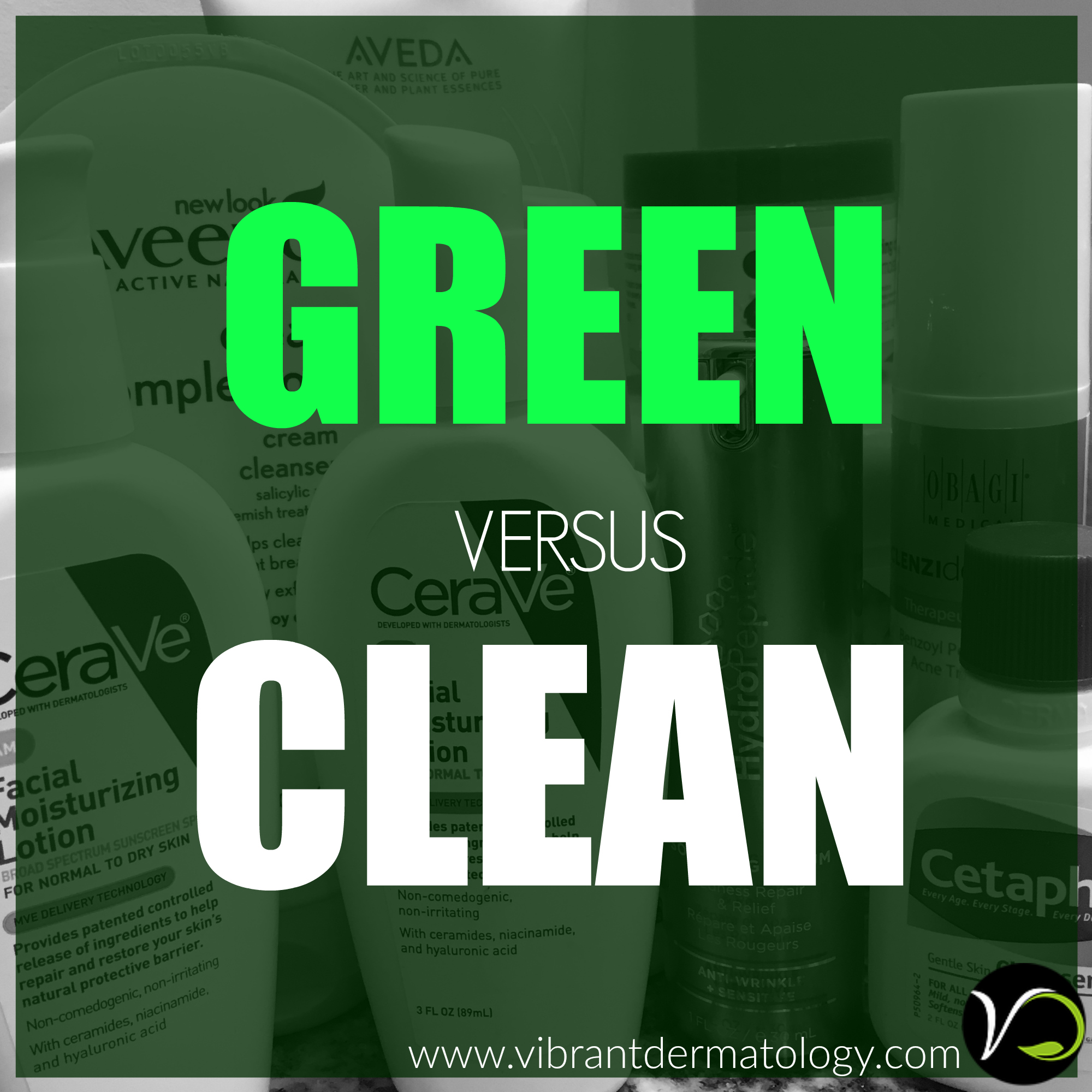
Clean Skincare Versus Natural Skincare

How many people do you know who swear by an ‘all-natural’ beauty routine?  There has been a huge shift in our society to the all-natural lifestyle, and for good reason.  Cancer rates are on the rise and research has proven that there are toxic chemicals everywhere.  The less exposure to toxic chemicals, the better.

One common belief is that stripping down to an all-natural lifestyle will help you achieve perfect skin.  The thought behind this is that by reducing exposure to toxic substances, there will be no inflammatory response. In my job I see firsthand that an all-natural routine isn’t necessarily going to benefit every patient.  While I do believe that reducing exposure to inflammatory substances will help to clear your skin, there are some skin conditions that simply require treatment. Non Surgical Eye Lift

For example, acne.  There are people out there that swear by a natural acne cure – meaning cleaning up your diet and avoiding store brought products.  They use naturally occurring elements to cleanse and moisturize (things like honey and coconut oil) and attribute their clear skin to this. Most likely, if you suffer from acne, this natural routine alone isn’t going to clear your skin.  You will need to actually treat the acne.

Things to avoid

When researching chemicals in skincare products, you will find that there are hundreds of chemicals that may be introduced in products (especially in the United States, the UK has stronger regulations in place).  Some people will always try to make the case that the chemicals you are exposed to in these products is minimal so it shouldn’t matter.  Personally, I’m not taking that chance.

It’s tricky to narrow down the complete list of things you should avoid.  Your best bet is to review the list of ingredients on a selected product and do your research.  I find Safecosmetics.org a great resource for this. 

The list below is a starting point of things that I would always recommend you avoid.

  • Lead – occur in products as a contaminant, may be found in toothpaste, some lipsticks and mens hair dye
  • Mercury  – a preservative used in eye makeup
  • Parabens – a preservative found in skin and body care products
  • Fragrance – a catch-all name used to indicate a number of chemicals in personal care products
  • Triclosan – anti-bacterials that may be found in hand soap, deodorant, toothpaste and bodywash
  • Butylated Hydroxyanisole (BHA) – antioxidant that may be found in cosmetic and personal care products
  • Formaldehyde-releasing preservatives (DMDM, urea, methenamine, sodium hydromethlyglycinate) – used as a disinfectant and may be found in nail polish, soap, deodorant, shaving cream, eyelash adhesive and shampoo.

Trusting the Brand

The labels ‘Organic’ or ‘Natural’ don’t actually carry any legal requirements so you need to drill down into the ingredient lists in order to verify that the product is in fact clean of harsh chemicals.  If you are looking to clean up your personal care products, start by researching brands that share the same philosophy that you do.  If you choose natural products, just be sure to be careful of contact allergens. Regular exposure to pure essential oils can sometimes result in contact dermatitis, which can be a severe itchy rash.

Personally, I choose brands that create products using clean technology.  Utilizing peptides and antioxidants over chemicals to achieve the results I desire.  If you are looking for a clean skin care brand that offers everything from body lotions, shampoo, and shaving cream try Vanicream. It’s a one of my go to lines for patients with sensitive skin or for patients who are looking for products that are “free and clear.”

Challenge

I challenge you to go into your bathroom now.  Pickup your shampoo (or facewash, handwash, anything!) and look at the ingredient list.  Anything not sound right?  I’d love to hear about it either in the comments below or email me at info@vibrantdermatology.com.

Dermatologist Boston

Hyde Park Dermatology

Black Dermatologist

Canton Dermatologists

African American Dermatologist


Can You Find Beauty In The Kitchen?

DIY (Do It Yourself) is a huge buzzword these days.  I recently purchased the book ‘Homemade Beauty’ by Annie Strole because I’m curious about what actually works on skin and what doesn’t.  To be honest, I haven’t tried and of her suggested recipes yet.  As a dermatologist I take pride in having perfect skin and am worried about a possible irritation or reaction.  When it comes to your skin, it is important to understand that some DIYs could be ineffective (waste of money and effort) or damaging (allergic reactions, tissue damage, etc).  Before you mix up something for your skin at home, here are five things to watch out for with DIY home treatments.  

Coconut Oil – People rave about how soft this makes their skin.  An  all-natural oil that can be really effective and a great moisturizer. However, this oil can also be very allergenic.  If you use coconut oil as part of your skin care routine, watch out for any suspicious rashes or irritation and stop use immediately. Non Surgical Eye Lift

Lemon – This highly acidic juice can irritate the skin and impact the acid balance.  The natural pH of skin is 4.5-5 while lemon juice has a pH of 2.  Keeping pH in balance is important to the overall health of your skin.  Lemon juice is highly acidic and can cause irritation.  Also, the oils in citrus fruits are phototoxic (meaning that exposure to sun can result in a dark hyperpigmented rash that can take weeks to resolve).  While some people claim that lemon will help to fade scars and lighten dark spots, the risk of irritation and damage to skin is high. So lemon for your skin is a no-no but if you want to ingest it go right ahead!  In fact, I swear by squeezing fresh lemon into my water every day. It’s a great detox, and it’s full of natural antioxidants that are great for the skin.

Baking Soda – The texture of baking soda mimics that of our favorite exfoliators and some say that it will help to slough of dry skin.  However the pH of baking soda is too alkaline for the face.  With a pH of 9, baking soda can damage the skin’s natural barrier (which keeps bad bacteria out). This can result in skin infections and can also result in moisture loss.  

Sugar – I’ve already posted about how too much sugar can cause breakouts on your skin but using it externally can be just as bad.  The skin on your face is really thin and is no match for the texture of sugar.  You will actually find that many of the scrubs and exfoliators on the market are too rough and are likely creating tiny tears which damage and prematurely age the skin.  Keep the sugar exfoliation on your legs and feet. When I want to exfoliate my face, I choose gentle exfoliators. I’ve already raved about Hydropeptide’s plump and polish peel. It uses gentle microdermabrasion crystals for exfoliating. If you’re looking for a more budget friendly option, a once weekly gentle apricot scrub will do.

Rubbing Alcohol – This antibacterial disinfectant is great for sterilizing wounds and cleaning your house.  For your facial skin, I’m not a fan.  Alcohol is one of the most drying, damaging ingredients that you can put on your face.  Many toners and facial astringents contain ispropyl alcohol which will strip the skin.  Stripping the skin of its natural oils will paradoxically cause you to produce excess oils that can clog pores.  Be on the lookout for this ingredient and avoid these products.  

I do have a DIY DO to share that I have had some success with.  When my son was born I started having problems with my hair and began using a blend of oils that somebody suggested.  I mix equal parts of peppermint oil, jojoba oil, Jamaican black castor oil, rosemary oil, and tea tree oil. Some studies have found rosemary oil to be as effective as 2% minoxidil.

Do you have a DIY that you swear by?  Have you had a DIY disaster?  Please share with me at info@vibrantdermatology.com.

If you are interested in Beauty Tips, Giveaways, and more, be sure to join my Beauty Club.

Dermatologist Boston

Hyde Park Dermatology

Black Dermatologist

Canton Dermatologists

African American Dermatologist


Thicker, Fuller Lashes

My eyelashes have never been full, long or strong.  In fact, they are kind of wimpy. As a dermatologist, I often prescribe a medication called Latisse to patients who desire longer, fuller, eyelashes.  Latisse contains a prostaglandin analog called bimatoprost. While it is very effective, I have had two personal concerns with the product that cause me not to use it personally. One, I’ve found that some peoples eyelashes grow out in a way that looks a little artificial… kind of like spider legs. This is rare, but I wasn’t interested in that look myself! More importantly, being that I am more inclined to use green/clean products, I was just a little wary of putting a prostaglandin analog near my eyes. I believe that it’s safe, otherwise I wouldn’t prescribe it at all. But when it comes to my personal preference, I err on the side of extreme caution. My entire job, after all, depends on be having keen eyesight (can’t be a blind dermatologist, unfortunately).

I’ve tried a variety of natural formulas to strengthen my weak eyelashes but often didn’t see the results I’d expected.  I started using LASH from Hydropeptide about 6 months ago and have been blown away by the results.  This was the first Hydropeptide product that I tried and I was amazed by how well it worked.

Application of this product is easy.  Simply apply a thin coat of the product at the base of your eyelashes every evening (it goes on a bit like liquid mascara).  I did notice some tingling the first couple of nights that I applied the product but it wasn’t painful and subsided within a week.  For best results, you will want to apply this product every evening.  I started noticing new growth about two weeks into use and by the end of the first month my lashes were definitely stronger. 

As with all HydroPeptide products, I love that this is made with clean technology and free of most nasty chemicals.  The LASH formula has 3 peptides (including eyelash fortifying peptides and hair-fullness peptide for superior lash results), biotin, folic acid, hydrogenated lecithin, lemon peel extract (to help prevent breakage and strengthen hair), and soybean oil  (to hydrate and nourish the brow and lash area).  In full disclosure, I will say that it does contain a preservative. I have talked in detail with the company about this, as I do strive to be mostly preservative free. In this instance, it’s all about safety. You pretty much have to use a preservative with products used around the eye.  Think of the catastrophic consequences of an eye infection.

You can also use this product to fill out thinning eyebrows.  If you are already using  Latisse and happy with the results, by all means continue. It is the prescription gold standard. But if you are looking for something cleaner and extremely effective, this product is a MUST have.

Order LASH direct from Hydropeptide 

Looking for more product recommendations, skin tips and giveaways?  Join my Beauty Club and Referral Program and be sure to connect with me on Facebook, Twitter, Instagram, and Pinterest.

Dermatologist Boston

Hyde Park Dermatology

Black Dermatologist

Canton Dermatologists

African American Dermatologist


What’s The BEEF With MEAT?

I had lunch with a good friend recently and as she ordered her club sandwich, she requested that the bacon be left off of it.  As I glanced her way she sort of sighed and said ‘did you see the W.H.O. report, now bacon can cause cancer!’  

Of course, she was referring to the clarification report that the World Health Organization recently issued stating that there is an increased risk for colorectal cancer from eating processed meat.

Before we all jump to conclusions about this, it is important to understand the data behind the statements.  The W.H.O. has classified meat alongside numerous other products as a ’probably and possible carcinogen’.  It lists bacon alongside cigarettes, alcohol and asbestos.  We know that smoking raises a person’s risk of developing lung cancer by 2,500 percent (so quit smoking NOW!).  Based on the association identified by the W.H.O., two daily strips of bacon would translate to about a 6 percent risk for colon cancer (up from the 5 percent risk for those who aren’t enjoying bacon).  Sadly, the messages that came forward after the W.H.O. announcement made it sound as if bacon is just as bad as cigarettes.  

Another factor that isn’t considered in this report is the overall lifestyle of individuals.  Could it be that the bacon eaters are more likely to be smokers or sedentary – factors that increase your risk of cancer and that the non-meat eaters exercise regularly and eat their vegetables (which helps to protect them)?  How about the genetics of the individual?  We know that genetics can play a role in cancer.  

Although red and processed meats can increase your risk of colon cancer, there is no need to cut these products from your diet entirely.  

Red meat has been identified as all types of mammalian muscle meat (beef, veal, pork, lamb, mutton, horse, and goat).  Processed meat refers to meat that has been transformed through salting, curing, fermentation, smoking or other processes to enhance flavor or improve preservation (hot dogs, sausages and ham are a few examples). Some processed meats contain nitrites, which are potential carcinogens, If you are a big consumer of red and processed meet, an easy step to take is to reduce your intake.  Also, experts recommend an annual screening between the ages of 50 and 75 (or earlier if there is a family history of colorectal cancer).  Your doctor can provide you with guidance on diet and recommended screenings during your annual physical.  

Here are my rules when it comes to meat, based on my understanding of the science

  1. I stick to grass fed/vegetarian fed, organic meat. It is obviously more expensive, but I’d rather cut down on other non-essential things in order to afford good meat.
  2. I avoid all processed meats that contain nitrites. I look for labels that specifically say NITRATE free.
  3. I try to limit red meat overall all. We mostly eat chicken.  I use ground turkey instead of ground beef. If I have bacon, it’s turkey bacon
  4. When it comes to eggs and milk, I stick with the same principles – organic, vegetarian fed.
  5. I try to eat fish twice a week and only go for wild caught fish. Given the recent oil spills in our waters, I try to find Icelandic fish if I can.

To be honest, this W.H.O. clarification didn’t really alter the way that I eat.  We were already avoiding processed meats – earlier research has supported that these forms of meat aren’t very good for you.  We limit our consumption of red meat and when we do enjoy meat it is organic and we stick to the leaner cuts of meat.  I suggested to my friend that she go ahead and enjoy the bacon on her sandwich.  I know that she lives a relatively healthy lifestyle – a few slices of bacon every so often is not going to have a drastic effect on her overall health.  

What about you?  Would you eat the bacon?  Connect with me on Facebook and share your thoughts!


Dermatologist Boston

Hyde Park Dermatology

Black Dermatologist

Canton Dermatologists

African American Dermatologist


Cancer: Our Genes Are Not Our Destiny

Cancer is a really scary thing.  It seems like almost every day I either see a patient being diagnosed or hear of another friend being diagnosed with some form of cancer.  Ongoing research has offered so many advancements in how we diagnose and treat cancer but still, too many people are turning up with too many forms of cancer.  I recently read an article in Harvard Magazine highlighting the hereditary link in certain types of cancers. 

The dermatologist in me reads this article and recalls all of the skin cancers that I have seen in patients.  Skin cancer is highly heritable but with early detection it is usually 100% curable.  If you or a first degree relative have had a history of skin cancer, it is important that all other first degree relatives have regular skin checks by a Board Certified Dermatologist.  Educate your family members on the ABCDE’s of skin cancer and on the importance of using sunscreen on a daily basis.  Protect your children from UV rays with sunscreen and protective clothing. If you do notice something suspicious on your skin, visit a Board Certified Dermatologist as soon as possible.  Early detection is critical! 

Back to the article, the optimist in me reads this and considers the fact that 1/3 of cancers are very heritable, which means that 2/3 are not.  Think about that for a minute.  By reducing exposure to toxic substances and fueling your body with good, clean food, you can actually decrease your likelihood of getting cancer (the non-genetic cancers that is).  Our genes are not our destiny and good, clean food can be our best medicine.  Even in the instance of highly heritable cancers, environmental modifications can help! Take this example – You have two identical twins with a strong family history of melanoma.  One twin is a sun worshiper, smoker, and does not take very good care of himself. The second twin wears sunscreen, avoids the sun, eats well, and exercises plenty. Which twin is more likely to end of up with skin cancer? In my book, it’s genes + environment that usually determines what diseases we get. Science backs up this view point.

In my home, we have taken steps to proactively limit our exposure to everyday carcinogens.  We avoid processed junk food and artificial sweeteners and fuel our bodies with organic foods that are packed with antioxidants which helps to repair damaged cells.  We exercise on a regular basis (obesity has been linked to increase risks of certain types of cancers) and encourage an active lifestyle for our children.  We don’t smoke and consume alcohol only in moderation.  We limit the use of BPA, avoid personal care products that contain certain chemicals like phthalates, sulfates etc and use natural cleaning products.  I could fill pages and pages about how  we are striving to live ‘clean’.  I say strive, because I am practical. I am a working woman, and a mom, and busy just like everyone else. Are we always perfect, no. But, we try our best.

With all of this information, I would like to introduce a new segment that I am planning for my Blog – CLEANhealth.   Look for CLEANhealth blog posts and CLEANtips on my social media channels to highlight how I have created a CLEAN environment for my family.  I know that this CLEAN lifestyle will help to protect us from many forms of cancer and that is something that gives me comfort.

If you have taken an initiative to create a clean environment for your family, I would love to feature you on my blog.  Email me at info@vibrantdermatology.com. 


Dermatologist Boston

Hyde Park Dermatology

Black Dermatologist

Canton Dermatologists

African American Dermatologist


Say Farewell To Sweaty Pits

There is nothing more embarrassing than realizing that you have stains on your shirt from sweaty arm pits.  Or shaking somebody’s hand with a sweaty palm.  How about standing in front of a room of people with sweat dripping down your forehead (despite the room temperature being cool)?  Sweating is an essential body function for temperature-control but when it becomes excessive it can interfere with the quality of life.

Excessive sweating, known as hyperhidrosis, is frustrating for those that suffer from it.  I am one of them. A trial of antiperspirants and at home remedies will sometimes result in a solution.  However, often times the solution is only temporary.  Prescription antiperspirants while effective for some can cause serious irritation.  

Research has been proven that treating excessive sweating of the armpits (as well as hands, feet, head and under the breasts) with Botox is safe and effective.  As a dermatologist, I have administered Botox to patients with excessive sweating on many occasions with incredible results.  The Botox causes a temporary cessation of sweat glands in the area that is treated.

The treatment can be done in the office in as little as 20 minutes and results will be noticeable in about 2 to 4 days after treatment (with the full effects noticed within 2 weeks).  One treatment can last up to almost nine months.  It does require several tiny injections in order to get the medication where it needs to go. This discomfort is usually manageable. We have some in-office tricks for keeping patients comfortable.  The best thing about this procedure is that it is now being covered by several insurance plans. This is amazing since out of pocket costs for Botox or other lasers that treat sweating can be upwards of $1500 a treatment.

Contact a board certified dermatologist to find out if you are a good candidate for Botox to treat hyperhidrosis.


Dermatologist Boston

Hyde Park Dermatology

Black Dermatologist

Canton Dermatologists

African American Dermatologist


  • « Previous Page
  • 1
  • …
  • 37
  • 38
  • 39
  • 40
  • 41
  • Next Page »

Problems We Treat

In the Clear

Acne: Adults & Teens

lllumination

Hyperpigmentation, Sun Spots, Melasma

Red, Red Go Away

Rosacea, Facial Redness, Sensitive Skin

Tall Drink of Water

Excessively Dry Skin, Eczema

Fountain of Youth

Anti-Aging, Skin Rejuvenation

Mommy & Me Skin Care

For Pregnant & Nursing Mothers

Just for Kids

Skin Care For Those 12 & Under
Contact
Vibrant Dermatology
588 Providence Hwy
Dedham MA 02026
Phone: (617) 250-0257

Vibrant Dermatology
1 Central Ave.
Milton MA 02186
(entrance at 131 Eliot St.)
Phone: (617) 250-0257

© 2026 Vibrant Dermatology | Site Map | TOS/Privacy Policy | Vibrant Dermatology
book online